


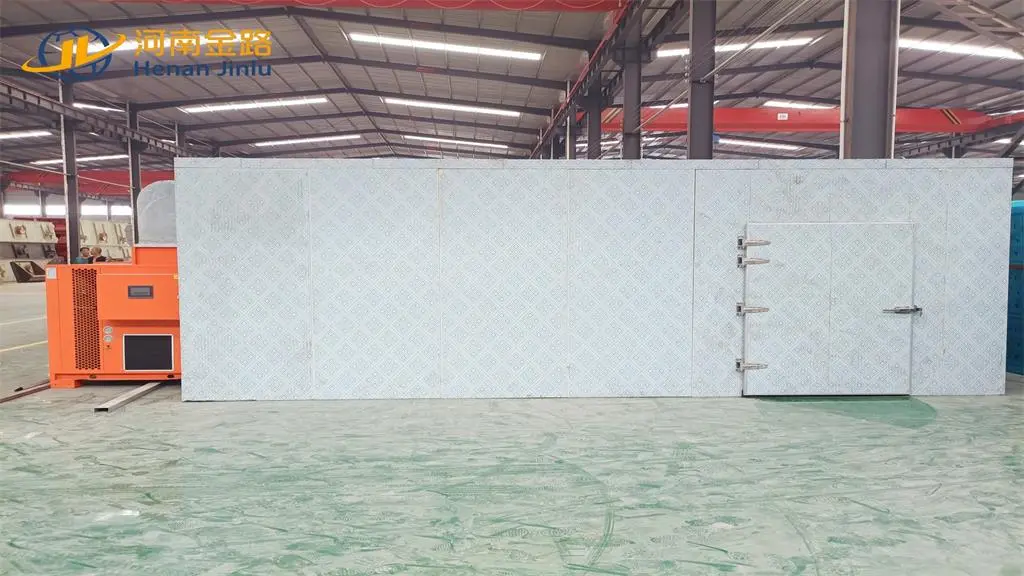
Biomass pellet drying moisture control is the single variable that determines whether a wood pellet operation succeeds or struggles. Get it wrong, and the downstream effects touch everything: pellet durability, mill throughput, energy consumption, storage safety, and whether your product meets export specifications like ENplus or ISO 17225.
This guide covers what actually matters when designing or upgrading a biomass pellet drying system.
Why Moisture Content Is the Central Variable
Raw biomass feedstock — sawdust, wood chips, agricultural residue — typically arrives at 35–55% moisture content, depending on source and season. For pelletizing, most mills need feedstock moisture in a narrow band, commonly 10–14%, before the material can be compressed into stable, durable pellets.
Too wet, and the pellet mill struggles: dies clog, energy consumption per ton spikes, and pellets that do form tend to crumble because the lignin binding mechanism (which relies on the right moisture-to-heat ratio) doesn’t activate properly.
Too dry, and pellets become brittle, generating excessive fines during handling and transport — a direct hit to yield and a common cause of failed quality inspections at the export stage.
The Core Engineering Challenge: Consistency, Not Just Average
A biomass pellet drying system that hits the right average moisture but with wide variance is arguably worse than one that runs slightly higher on average but stays consistent. Inconsistent moisture means the pellet mill operator is constantly adjusting die pressure and feed rate to compensate — which reduces throughput and increases wear on mill components.
This is why drying chamber design (airflow distribution, layer depth, residence time control) matters more than raw drying capacity on a spec sheet. Two dryers rated for the same throughput can produce very different real-world consistency depending on how evenly hot air is distributed through the material bed.
Key Design Factors for a Biomass Pellet Drying Chamber
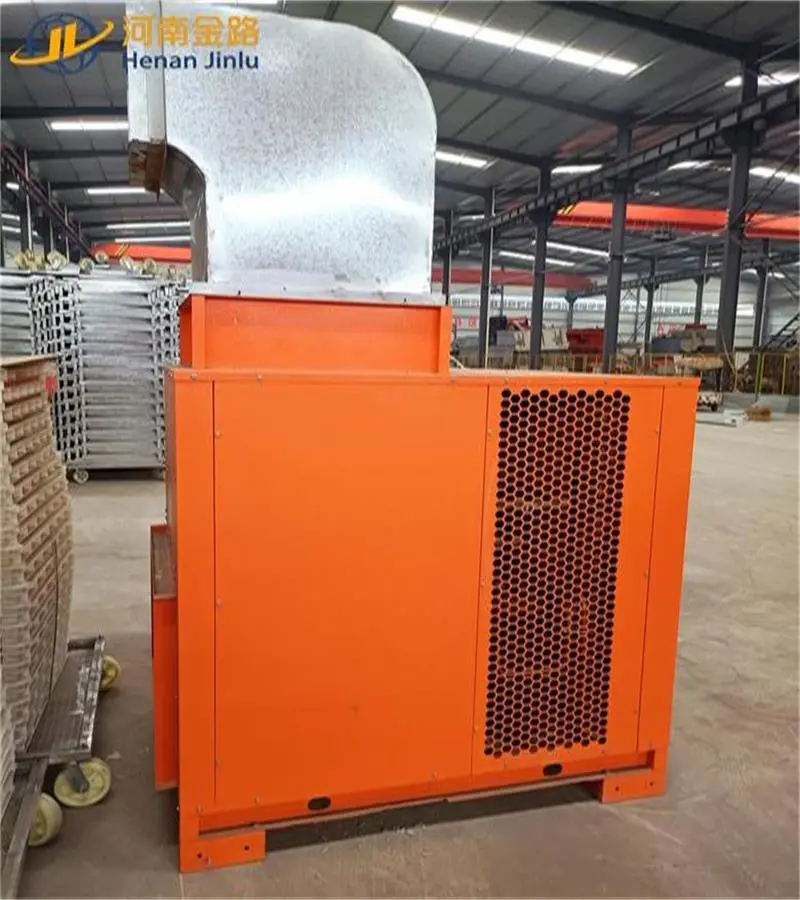
Airflow uniformity across the drying bed
Uneven airflow creates “channeling” — hot air finds the path of least resistance through the material, over-drying some areas while leaving others wet. Well-designed chambers use distributed air intake and adjustable dampers to correct for this as feedstock density varies.
Feedstock variability
Sawdust, bark, and agricultural residues each hold and release moisture differently. A system tuned only for sawdust may underperform when fed a mixed or seasonal feedstock blend — worth discussing explicitly with your equipment supplier if your feedstock source changes throughout the year.
Heat source flexibility
Fuel cost volatility is a real operating risk. Multi-fuel capable systems (biomass self-fired, biogas, electric, or hybrid configurations) reduce exposure to any single fuel price spike and provide redundancy if one heat source becomes unavailable.
Residence time control
Drying too fast at high temperature can case-harden the outer layer of larger particles while the core stays wet — a defect that isn’t visible until the material fails at the pellet mill. Proper residence time, not just temperature, is what achieves uniform internal moisture.
Heat recovery
Exhaust air from biomass drying carries significant latent heat energy. Systems with heat recovery / dehumidification loops can meaningfully reduce total energy cost per ton dried, an increasingly important factor as energy costs rise in many regions.
Common Failure Modes and How to Avoid Them
Pellets crumble after cooling — usually caused by feedstock dried below target moisture. Recalibrate the drying setpoint and check for over-drying in specific chamber zones.
Die clogging and high mill energy draw — usually caused by feedstock above target moisture. Verify actual (not assumed) moisture at mill infeed, since dryer output may be inconsistent even when the average reading looks correct.
High fines percentage — usually caused by inconsistent moisture across the batch. Inspect airflow distribution and residence time uniformity in the drying chamber.
Rising fuel costs eating into margin — usually caused by a single-fuel-source system with no flexibility. Evaluate a multi-fuel retrofit or hybrid heating configuration.
Sizing a Biomass Pellet Drying System Correctly
Sizing should be based on:
- Peak feedstock intake volume, not average — feedstock supply is often as seasonal as grain
- Starting moisture range of your actual feedstock — test it, don’t assume
- Target moisture band required by your pellet mill and end-market specification
- Available fuel sources and their cost stability in your region
Undersizing a drying chamber relative to peak feedstock intake is a common and costly mistake — it creates a permanent bottleneck that limits total plant output regardless of pellet mill capacity.
FAQ
What moisture content should biomass pellets be before mechanical pressing?
Most pellet mills perform best with feedstock in the 10–14% moisture range, though the exact optimal point depends on species, particle size, and binder characteristics — your mill manufacturer’s specification should guide the target.
How much does moisture inconsistency actually cost?
Beyond direct fines and rejected batches, inconsistent moisture increases mill die wear and energy draw per ton, and can cause intermittent production stoppages for clearing clogs — costs that are easy to underestimate until measured over a full production run.
Can one biomass pellet drying system handle both sawdust and agricultural residue?
It’s possible, but requires deliberate design for variable feedstock density and moisture-holding characteristics. Systems built and tuned for a single feedstock type often underperform when fed a different material without reconfiguration.
If you’re scaling a pellet operation or dealing with inconsistent moisture output from an existing biomass pellet drying system, our engineers can review your feedstock and target specs and recommend a configuration before you invest.