


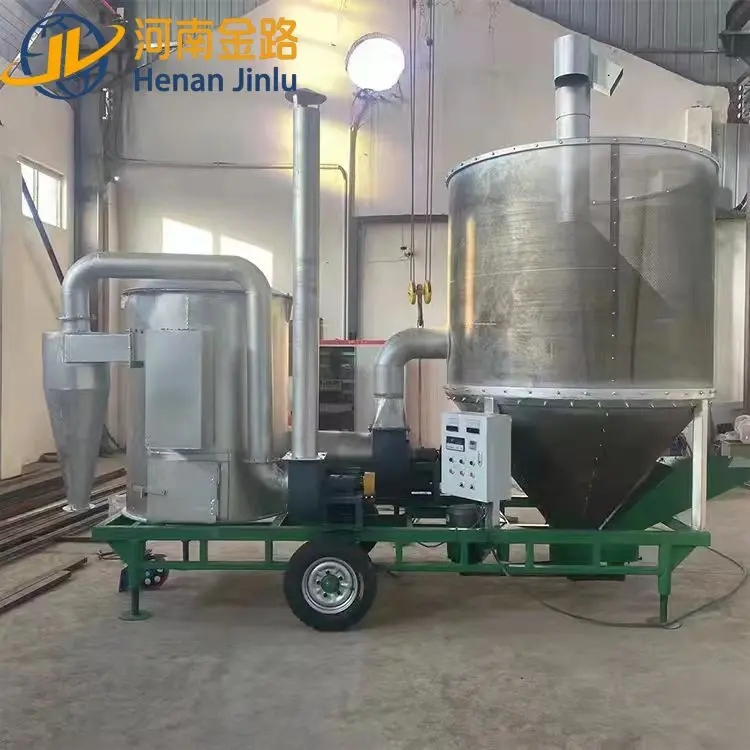
A continuous flow grain dryer is one of two core dryer types every grain processor or storage operator has to choose between — and getting it wrong is one of the most expensive mistakes you can make. The equipment itself typically runs for 10–15 years, so a mismatch between dryer type and operating conditions doesn’t just cost money upfront — it creates ongoing quality losses, energy waste, and bottlenecks that compound every harvest season.
This guide breaks down the real engineering differences between continuous flow and batch grain dryers, so you can match the system to your actual throughput, grain type, and moisture risk profile — not just the sales brochure.
The Core Difference
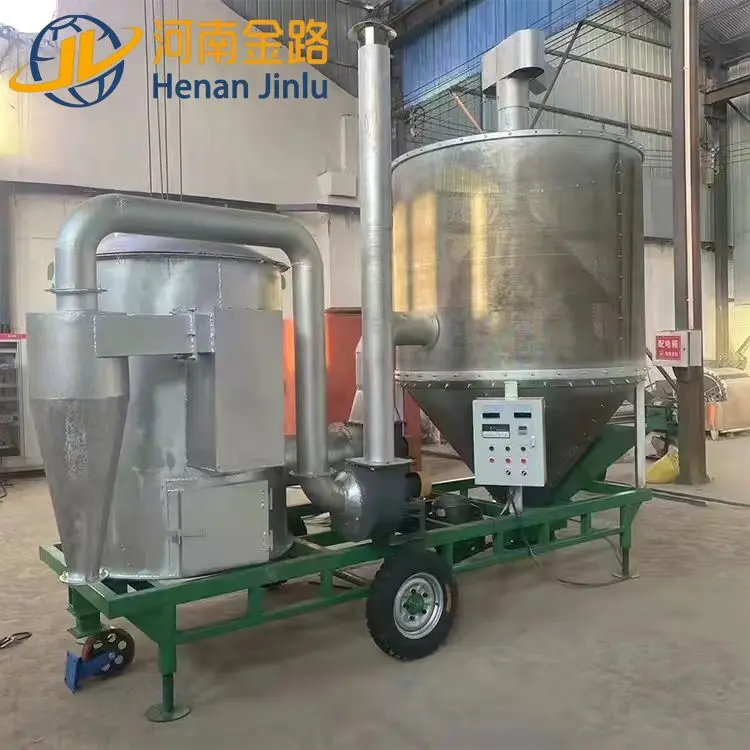
Batch dryers load a fixed volume of grain, dry it as a single unit to target moisture, then discharge the entire batch before the next load begins. Drying, resting, and cooling happen in distinct phases.
Continuous flow dryers move grain constantly through the drying column — wet grain enters at the top, dried grain discharges at the bottom, in an uninterrupted flow. Multiple batches of grain, at different stages of drying, are inside the machine simultaneously.
The distinction sounds simple, but it drives almost every other decision: capacity, moisture uniformity, energy consumption, labor requirements, and capital cost.
Continuous Flow Grain Dryer Capacity and Throughput
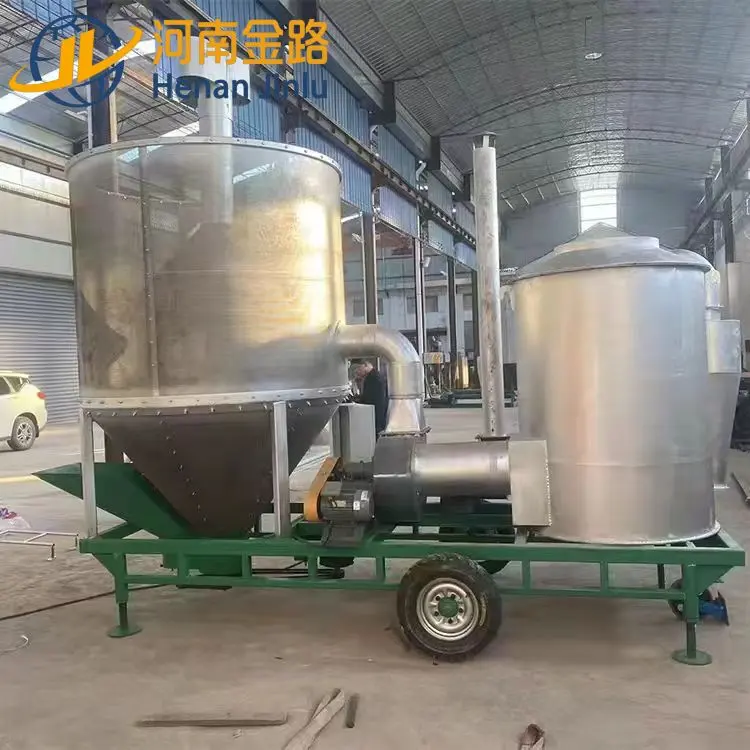
Continuous flow dryers are built for sustained, high-volume operation — they are the standard choice once daily intake regularly exceeds roughly 100–150 tons. Because grain is always moving through the system, there’s no idle time between batches, which makes continuous dryers significantly more efficient per hour of operation at scale.
Batch dryers make more sense for smaller or seasonal operations, where daily intake is inconsistent and the flexibility to dry partial loads (or stop between batches) matters more than maximum throughput.
Rule of thumb: if your bottleneck during harvest season is “we can’t unload trucks fast enough,” you likely need continuous flow. If your challenge is “we have wildly different volumes day to day,” batch flexibility may serve you better.
Moisture Uniformity
This is where the two systems differ most in outcome quality. In a continuous flow dryer, grain passes through the same heating and cooling zones at a controlled rate, which tends to produce more consistent moisture content across the full volume — important for buyers with strict export moisture specifications (commonly ≤14% for safe long-term storage of corn, wheat, and rice).
Batch dryers can achieve excellent uniformity too, but require more careful operator control of loading, mixing, and hold time — inconsistent operation is the most common cause of uneven batches, with some kernels over-dried (increasing breakage) and others under-dried (creating mold and mycotoxin risk in storage).
Energy Consumption
A well-configured continuous flow grain dryer generally has a thermal efficiency advantage at scale… because heat exchange is continuous and the system reaches steady-state operation — there’s no repeated heat-up and cool-down cycle for every batch. Over a full season, this can translate into a meaningful reduction in fuel cost per ton dried, though the exact number depends heavily on grain type, starting moisture, and ambient conditions.
Batch dryers lose some efficiency to repeated startup cycles, but this is often offset by better matching to variable daily volumes — running a continuous dryer at 40% capacity is often less efficient than running a correctly-sized batch dryer at full load.
Labor and Automation
Continuous flow systems, once configured, require less constant operator intervention — moisture sensors and automated control logic manage the flow rate and temperature. Batch systems require more active monitoring at each load/unload cycle, though this also gives operators more direct control when working with variable or sensitive grain types.
Capital Cost and Payback
Continuous flow dryers carry a higher upfront capital cost, but the per-ton drying cost is typically lower at high volumes, meaning payback periods shorten significantly for operations above the throughput threshold mentioned earlier. Below that threshold, the higher capital cost of continuous systems is harder to justify.
A Practical Decision Framework
Ask these questions before choosing:
- What is your realistic daily intake during peak harvest? Below ~100 tons/day, batch systems are usually more cost-effective. Above that, continuous flow starts to pay for itself.
- How strict is your moisture spec? Export contracts or high-value seed grain with tight tolerances favor continuous flow’s consistency.
- How variable is your daily volume? High variability favors the flexibility of batch systems, or a hybrid batch-continuous configuration.
- What’s your available labor for active monitoring? Continuous systems reduce labor demand once tuned; batch systems need more hands-on attention.
- What’s your growth trajectory? If you expect volume to scale substantially within 3–5 years, it may be worth investing in continuous flow capacity now rather than upgrading twice.
Common Mistake: Undersizing for “Average” Instead of “Peak”
The single most common sizing error is designing dryer capacity around average daily intake rather than peak harvest-day intake. Grain arrives in surges, not steady flows — a dryer sized for the average will create a bottleneck exactly when it matters most, forcing grain to sit in wet holding longer than is safe and increasing spoilage risk.
FAQ
Can a single facility use both types?
Yes — many mid-to-large operations run a batch dryer for flexibility during shoulder-season intake and a continuous flow system to handle peak harvest volume, using both to smooth out capacity constraints across the season.
Which type handles high-moisture grain (above 25%) better?
Both can handle high-moisture grain, but continuous flow systems with multi-stage tempering zones generally manage the drying stress more gently, reducing stress cracking in kernels like corn and rice.
How often does a continuous flow dryer need to run to stay efficient?
Continuous systems are most efficient when run near their rated capacity for sustained periods. Frequent starting and stopping erodes much of their efficiency advantage over batch systems — this is an important factor to weigh if your intake is unpredictable.
If you’re evaluating grain dryer options for a specific throughput, moisture target, or grain type, our engineering team can help you run the numbers before you commit to a system.