


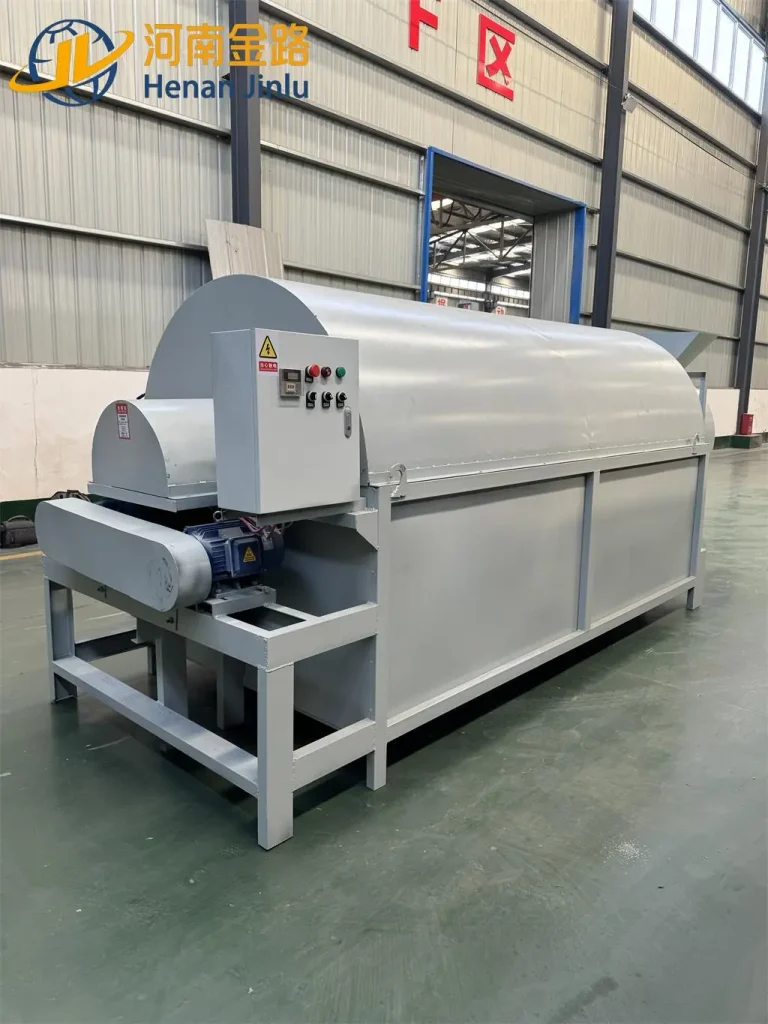
A drum dryer for biomass, sludge, and other heavy-duty waste materials exists for one core reason: some are too heavy, too variable, or too abrasive for gentler drying systems like mesh belt or tray dryers. Sludge, coal fines, biomass waste, agricultural residue, and recycled materials often arrive with unpredictable moisture content, mixed particle sizes, and physical characteristics that would clog or damage more delicate equipment. Drum dryers are built to absorb that variability.
This guide covers what actually determines whether a drum dryer performs reliably at scale — and where operations commonly get the specification wrong.
How a Drum Dryer Works
Material enters a rotating cylindrical drum, where internal lifting flights repeatedly lift and drop it through a stream of hot air (or hot gas) as the drum rotates. This tumbling action continuously exposes fresh material surface to the heat source, which is what allows drum dryers to handle irregular, clumped, or high-moisture material that would blind or clog a belt or tray system.
Typical residence time inside the drum ranges from roughly 15 to 40 minutes depending on material type, drum length, and target final moisture — sludge and other high-moisture materials generally sit toward the longer end of that range, while pre-dried or lower-moisture biomass moves through faster.
Depending on configuration, the material and hot air can flow in the same direction (co-current) or opposite directions (counter-current) — a design choice with real operational consequences.
Co-Current vs. Counter-Current: Why It Matters
Co-current flow (material and hot air moving the same direction) exposes the wettest material to the hottest air at the inlet, then progressively cooler air as moisture drops. This reduces the risk of overheating and scorching material that’s already dry by the time it nears the outlet — important for heat-sensitive materials.
Counter-current flow exposes the driest material (near the outlet) to the hottest air, which can achieve a lower final moisture content but carries higher risk of overheating or even combustion risk for flammable materials like biomass dust, if not carefully controlled.
The right choice for a drum dryer depends heavily on the material’s heat sensitivity and the target final moisture — this is a decision that should be made deliberately with your equipment supplier, not defaulted to whichever configuration happens to be in stock.
Key Drum Dryer Design Factors
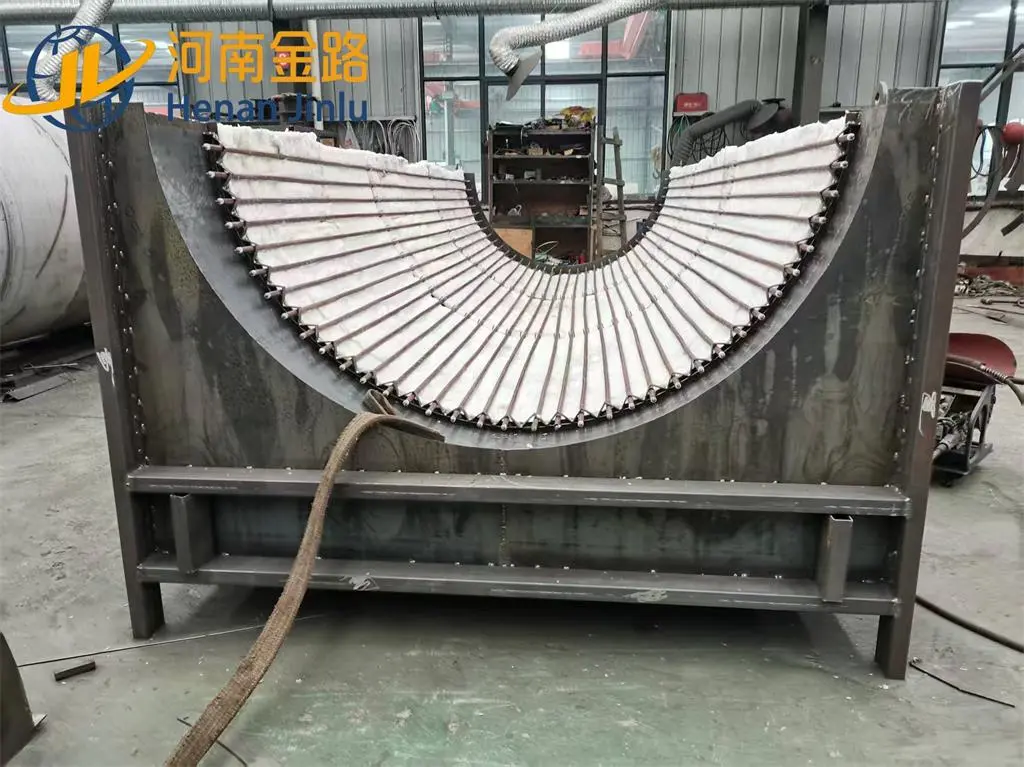
Lifting flight design
Flight shape and spacing determine how effectively material is lifted and showered through the airstream. Two specific defects account for most flight-related performance problems: flights with insufficient height fail to lift denser or wetter material clear of the drum bottom, so it slides through without adequate air exposure; flights spaced too far apart create long gaps in the material curtain, letting hot air pass through with little material contact. Both defects show up as the same symptom downstream — uneven final moisture — which is why flight geometry is one of the first things worth inspecting when output quality drops.
Drum slope and rotation speed
Together, these determine residence time — how long material stays inside the drum. Too short a residence time leaves material under-dried; too long wastes energy and reduces throughput. Rotation speed and slope need to be matched to the specific material’s flow characteristics, which vary significantly between, say, sawdust and sludge.
Feedstock variability handling
Waste and biomass feedstocks are rarely uniform — moisture content, particle size, and density can shift meaningfully from batch to batch, sometimes within the same day. A drum dryer sized and tuned only for “typical” feedstock will underperform when conditions drift outside that range, which for waste-stream materials is often the norm rather than the exception.
Wear liner selection and abrasion management
For highly abrasive materials — coal fines, mineral slag, ore, and similar dense particulates — internal wear on the drum shell and lifting flights is one of the largest long-term operating costs, and one of the easiest to underestimate at the specification stage. Wear liners (the replaceable protective layer inside the drum) vary significantly in material and thickness depending on the abrasiveness of the feedstock, and this directly affects how often the drum needs to be taken offline for liner replacement. Before finalizing a spec for abrasive material, it’s worth asking your supplier two specific questions: what wear liner material and thickness is recommended for your specific feedstock, and how accessible are the flights and liner panels for replacement — a design that requires extensive disassembly turns a routine maintenance task into extended unplanned downtime.
Dust and explosion risk management
Fine biomass dust, coal dust, and similar materials carry real combustion and dust explosion risk when dried at high temperature with poor dust control. Explosion venting, spark detection, and properly designed dust collection systems are not optional extras for these materials — they’re core to a safe design.
Heat source flexibility — and its real operating cost
Given that waste and biomass drying operations often deal with volatile fuel costs and inconsistent access to specific fuel types, multi-fuel capable systems (coal, biomass self-fired, diesel, natural gas) provide meaningful operational resilience. But “flexible” isn’t free: switching fuel types typically means the burner needs to be rated (or retrofitted) for the different flame characteristics and combustion air ratios of each fuel, the control system needs separate calibration profiles for each fuel’s heat output curve, and the exhaust treatment system needs to handle a different emissions profile — coal and biomass combustion generally produce more particulate and require more robust filtration than gas or diesel. Evaluating multi-fuel capability should include asking your supplier exactly what re-tuning is required each time you switch, not just whether the burner can physically accept multiple fuels.
Typical Drying Performance Reference Points
Exact figures always depend on your specific material and target moisture, but for a drum dryer for biomass or sludge applications, a general reference is: industrial systems commonly operate in the range of tens of kilograms of water evaporated per cubic meter of drum volume per hour, with well-tuned systems toward the higher end of that range and poorly matched configurations well below it. Volume reduction for bulky waste materials commonly falls in the 60–70% range when moisture is reduced from a wet feedstock state to a stable, storable final moisture. These are starting reference points for early-stage sizing conversations, not substitutes for a proper feedstock test and engineering calculation.
Common Drum Dryer Failure Modes
Uneven final moisture or clumping at output — usually caused by inadequate lifting flight design (insufficient height or excessive spacing, as covered above) or the wrong rotation speed for the material type.
Frequent unplanned downtime — usually caused by feedstock variability exceeding the range the system was tuned for, or by wear liner replacement taking longer than necessary due to poor accessibility. Test feedstock across seasonal and batch variation, not just a single sample, and confirm liner maintenance access during the specification stage.
High dust emissions or safety near-misses — usually caused by inadequate dust collection or explosion protection for the material type. Check your dust control system’s rating against your specific material’s combustibility class.
Rising fuel costs eroding margin — usually caused by a single-fuel system with no flexibility, or a multi-fuel system that was never properly re-tuned after a fuel switch. Evaluate multi-fuel retrofit feasibility and confirm re-calibration procedures.
Sizing a Drum Dryer
Drum dryers should be sized around:
- The full realistic range of feedstock moisture and density your operation will encounter — not a single “typical” sample
- Required volume reduction (drum dryers can often reduce bulky waste material volume by 60% or more, which matters significantly for downstream handling and transport costs)
- Peak intake volume, particularly for operations tied to seasonal waste streams (e.g., agricultural residue after harvest)
- Local regulatory requirements around emissions and dust control, which vary significantly by region and material type
- For abrasive materials specifically, expected wear liner replacement cycle and maintenance accessibility — this affects total cost of ownership as much as energy efficiency does
FAQ
Can a drum dryer handle mixed or inconsistent feedstock?
Yes — this is one of the core advantages of drum dryers over gentler systems. But “can handle” and “handles optimally” are different; a system tuned for the full realistic range of your feedstock will perform far better than one specified around a single average sample.
How much can a drum dryer reduce material volume?
For bulky waste and biomass materials, volume reduction in the 60–70% range is commonly achievable, which is often as important as moisture reduction itself for reducing downstream transport and handling costs.
What’s the biggest safety consideration for biomass or coal drum drying?
For any drum dryer for biomass, coal, or similar combustible material, dust explosion risk is the top concern. Fine combustible dust generated during tumbling and drying requires properly rated dust collection, spark detection, and explosion venting — this should be a core part of the initial specification, not an afterthought.
Does switching fuel sources on a multi-fuel system require re-tuning?
Yes, typically. Burner settings, control system calibration, and exhaust treatment all need to account for the different combustion characteristics of each fuel — a multi-fuel system that hasn’t been properly re-tuned after a fuel switch is a common hidden cause of efficiency loss.
How often do wear liners need to be replaced when drying abrasive materials like coal or slag?
This depends heavily on liner material, thickness, and how abrasive the specific feedstock is, so there’s no universal number — but for highly abrasive materials, it’s worth treating liner replacement frequency and accessibility as a core specification criterion, not an afterthought, since it directly drives long-term maintenance cost and downtime.
Choosing a drum dryer for biomass, sludge, or other variable, abrasive feedstock? Request our drum dryer specification checklist — a short worksheet covering feedstock testing, flight design, wear liner selection, and flow configuration — and our engineers will review it with you before you finalize a spec.