


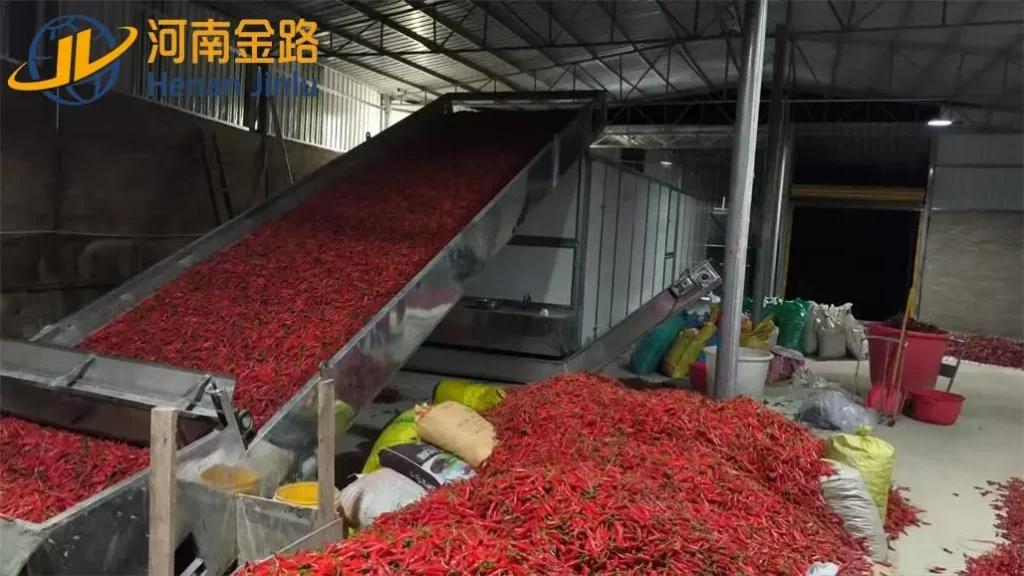
Understanding mesh belt dryer cost upfront helps you budget realistically before requesting quotes from suppliers.If you’re budgeting for a drying system, the honest answer is: it depends heavily on capacity, layer count, and heating source — there’s no single number that applies to every project. This guide breaks down the actual cost factors so you can estimate a realistic range before requesting a quote.
General Price Ranges (FOB China)
| System Size | Typical Capacity | Approximate Price Range (USD) |
|---|---|---|
| Small | 0.3–1.5 ton/h | 15,000 – 35,000 |
| Medium | 3–7 ton/h | 35,000 – 85,000 |
| Large | 8–12 ton/h | 85,000+ |
These are general reference ranges, not fixed pricing — the same capacity can vary significantly in price depending on the factors below. Full specifications for our standard models are on the mesh belt dryer page.
What Actually Drives the Price
1. Number of Layers
More layers means more capacity in a similar footprint, but also more belt material, more motors, and more zone controllers — cost typically doesn’t scale linearly with layer count, since a 6-layer system needs proportionally more structural support than a 3-layer one.
2. Heating Source
Steam heating systems generally cost more upfront (you need a boiler or steam supply) but are cheaper to run in regions with accessible fuel. Electric heating has a lower upfront cost but higher operating cost per ton in most regions. Biomass-fired systems sit in between and are popular where biomass fuel is locally available and cheap.
3. Material Grade
SS304 stainless steel is the standard choice for most applications. SS316 costs more but is necessary for corrosive materials or stricter food-grade/export requirements — if you’re unsure which grade your product needs, it’s worth checking your target export market’s requirements before ordering.
4. Automation Level
Basic PLC control with manual zone adjustment is the lower-cost option. Full HMI touchscreen control with data logging and remote monitoring adds cost but pays off for operations that need traceability (export documentation, quality audits) or run with limited on-site technical staff.
5. Belt Type
Standard stainless steel mesh belts are the default. Perforated plate or synthetic belts are chosen for specific materials and can shift the price in either direction depending on the material cost and durability needed.
Hidden Costs Buyers Often Miss
- Shipping and installation — a large system ships disassembled and needs on-site assembly; factor in freight cost and either your own technical team’s time or a supplier’s installation service fee
- Spare parts inventory — belts and spreaders wear over time; budgeting for a basic spares stock avoids extended downtime later
- Utility infrastructure — if you’re going with steam heating and don’t already have a boiler, that’s a separate cost not always included in the dryer quote itself
- Import duties and local certification — depending on your country, additional compliance costs may apply on top of the FOB price For country-specific import duty rates, tools like trade.gov can help estimate landed cost before finalizing a budget.
How to Get an Accurate Quote (Not Just a Ballpark)
A meaningful quote needs these details up front:
- Material type and its typical initial/target moisture content
- Target throughput (tons per hour or per day)
- Available heating source at your site (steam, gas, electric, biomass)
- Site space constraints, if any
- Automation level needed (basic vs. full traceability/data logging)
Without these, any number you get is closer to a guess than a quote — this is why generic “starting from $X” pricing on supplier websites is rarely useful for actual budgeting.
Is a Cheaper System Actually Cheaper Long-Term?
Not always. A lower upfront price often means thinner insulation, fewer temperature zones, or a lower automation level — all of which can increase energy cost per ton over the system’s working life. For a system expected to run continuously for years, energy efficiency differences compound significantly, and the cheaper option on day one isn’t necessarily cheaper by year three.
Frequently Asked Questions
Does price include installation?
This varies by supplier — some quotes are FOB (factory price only, you handle shipping/installation), others include on-site commissioning. Always confirm which one you’re being quoted.
How long does delivery typically take?
Most standard configurations ship in 30–60 days; heavily customized systems can take longer depending on the modifications needed.
Can I start smaller and expand later?
Many mesh belt systems are designed with modular expansion in mind — starting with fewer layers or a shorter belt and adding capacity later is often possible if this is planned for at the initial design stage.
Get an Accurate Quote for Your Project
Send us your material type, target capacity, and moisture requirements, and we’ll put together a specific quote rather than a generic estimate — see full specs on our mesh belt dryer page or contact us directly via WhatsApp.