


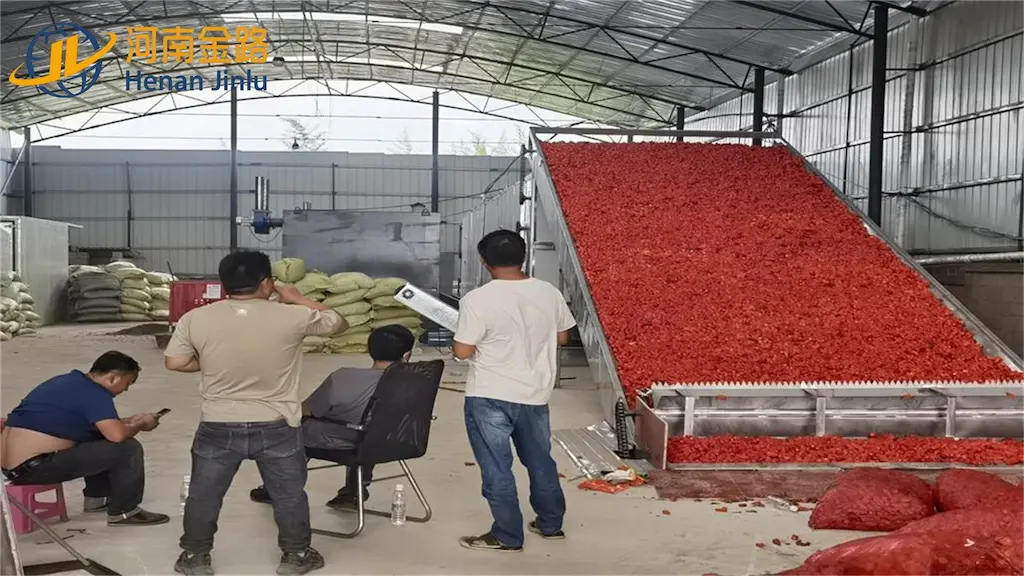
Using a mesh belt dryer for chili drying is one of the most reliable ways to hit export-grade color and moisture consistency at industrial scale…
Why Use a Mesh Belt Dryer for Chili Drying
Fresh chili typically starts at 70–80% moisture and needs to come down to 8–10% for stable long-term storage and export. Along the way, three things commonly go wrong:
- Case hardening — the outer skin dries and seals too fast, trapping moisture inside, which leads to spoilage later even though the chili looks dry
- Color loss — high heat early in the process bleaches or browns the pepper, which hurts the price you can get for it
- Uneven batches — poor airflow distribution means some peppers finish drying while others are still wet
A well-configured mesh belt dryer is built specifically to avoid these problems through multi-zone temperature control, which is why it’s become the standard choice for commercial chili processors over single-zone tunnel or box dryers.
Recommended Process Settings for Chili
| Stage | Temperature | Airflow Direction | Purpose |
|---|---|---|---|
| Zone 1–2 (early) | 50–60°C | Up-flow | Gentle initial moisture removal, avoids case hardening |
| Zone 3–4 (middle) | 60–70°C | Down-flow | Steady moisture reduction through the pepper’s core |
| Zone 5 (final) | 55–65°C | Balanced | Final moisture leveling before discharge |
These ranges are a starting point — the exact settings depend on pepper variety, initial moisture, and how thick the batch is loaded on the belt. Fresh red chili and dried-on-the-vine chili, for example, need noticeably different early-stage temperatures.
Belt Loading and Layer Thickness
Chili should generally be loaded no more than 2–3 layers deep on the belt. Loading too thick to increase throughput is the most common mistake — it looks efficient on paper but causes the bottom layer to over-dry while the top layer stays wet, forcing you to either slow the belt down (losing the throughput gain anyway) or accept an inconsistent batch.
Color Retention Tips
- Keep peak temperature under 70°C — chili pigment (capsanthin) starts degrading noticeably above this
- Use gentler up-flow air in the first zones rather than blasting hot air directly onto fresh material
- Where possible, pre-sort chili by size before loading, since smaller peppers dry faster and can over-dry while larger ones are still catching up
Mesh Belt Dryer vs. Sun Drying or Simple Tunnel Dryers
Traditional sun drying is cheap but leaves you exposed to weather, contamination, and inconsistent quality — it’s difficult to meet export hygiene standards this way. Simple single-zone tunnel dryers are an improvement but lack the staged temperature control that prevents case hardening. A multi-layer mesh belt system with 3–5 independently controlled zones solves both problems: consistent, weather-independent, hygienic drying with the temperature staging chili specifically needs.
Typical Capacity for Chili Processing
For most mid-size processors, a system in the 2–3 ton/h range (fresh chili input) is a common starting point, similar in scale to typical commercial installations. Larger export-focused operations often run multiple parallel lines rather than a single oversized unit, since it’s easier to service and maintain smaller parallel systems without stopping the whole production line.
Frequently Asked Questions
Can the same mesh belt dryer handle both chili and other vegetables?
Yes — most systems are flexible enough to handle chili, garlic, ginger, and similar produce, though you’ll want to adjust temperature and belt speed settings between material types.
How long does a typical chili drying cycle take?
This depends on layer count and belt speed, but most systems are designed for continuous 24/7 operation rather than fixed “batch cycles” — material enters and exits continuously once the system reaches steady state.
Does drying reduce chili’s heat (Scoville rating)?
Properly controlled drying at moderate temperatures has minimal impact on capsaicin content. Excessive heat or prolonged high-temperature exposure is more likely to affect flavor compounds than the heat level itself.
Get a Configuration Recommendation
Chili drying setups vary a lot based on variety, target export market, and capacity — if you’d like a specific configuration recommendation, see our full mesh belt dryer specifications page or contact us directly via WhatsApp with your material details.
According to FAO guidance on post-harvest processing, controlled drying temperature is one of the most critical factors in preserving both nutritional value and market quality of dried produce.