


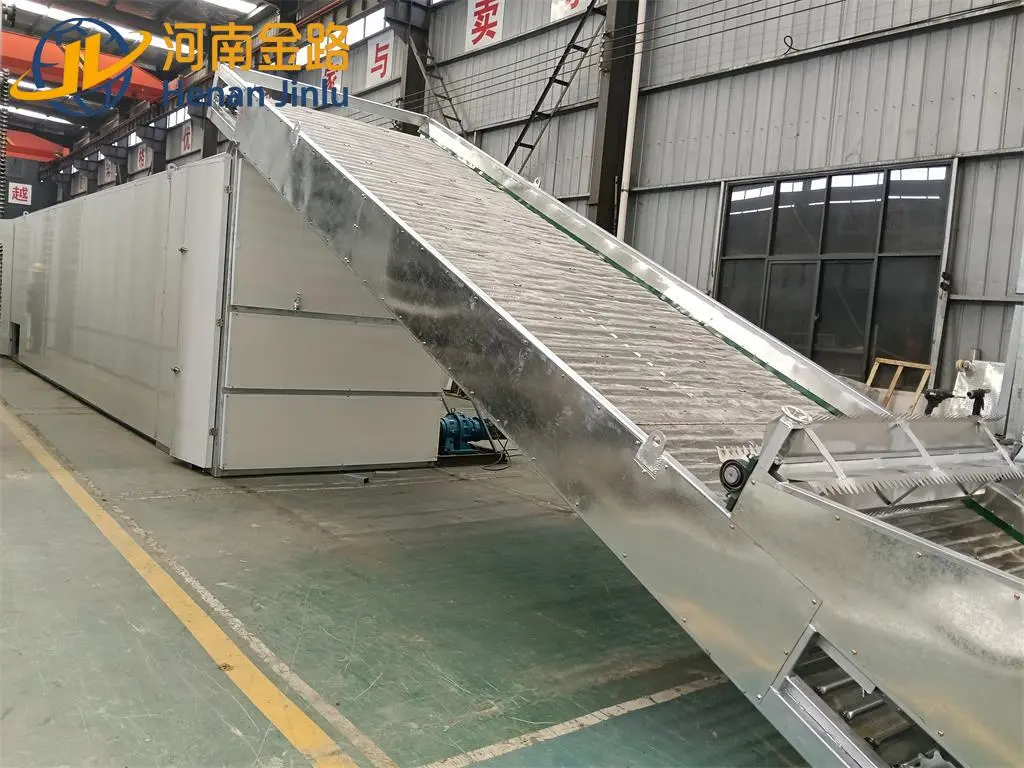
Choosing between a mesh belt dryer vs drum dryer comes down to one core question: does your material need gentle handling, or does it need raw throughput?
These are the two most common industrial drying systems, and they get confused often because both handle high-volume continuous drying. But they’re built for genuinely different materials, and picking the wrong one leads to either damaged product or wasted energy. Here’s how to tell which one fits your application.
Mesh Belt Dryer vs Drum Dryer: The Core Difference
A mesh belt dryer moves material slowly and gently across multiple stationary belt layers inside temperature-controlled zones. A drum dryer tumbles material continuously inside a rotating cylindrical drum while hot air passes through.
The difference in mechanism is exactly the difference in what each is good at: a belt system is gentle and precise; a drum system is rugged and high-throughput.
Side-by-Side Comparison
| Factor | Mesh Belt Dryer | Drum Dryer |
|---|---|---|
| Material handling | Gentle, minimal tumbling | Continuous tumbling |
| Best for | Food, biomass, heat-sensitive materials | Bulk minerals, sand, ore, granular waste |
| Product damage risk | Low | Higher (abrasion from tumbling) |
| Temperature zones | Multiple independent zones | Generally single or dual zone |
| Footprint | Longer, multi-layer structure | More compact for equivalent capacity |
| Typical capacity ceiling | Moderate to high | Very high (built for bulk minerals) |
| Energy use per ton | Generally lower | Generally higher for delicate materials |
When a Mesh Belt Dryer Is the Right Call
- You’re drying food products, herbs, or anything where appearance and texture matter (chili, fruit slices, vegetables)
- The material can’t tolerate tumbling or abrasion — pet food kibble, extruded feed, delicate biomass
- You need precise, staged temperature control rather than one blast of hot air
- Hygiene and food-grade construction matter for your certification requirements
When a Drum Dryer Is the Right Call
- You’re processing bulk minerals, sand, ore, or similarly rugged granular material
- Throughput matters more than gentle handling — the material can handle tumbling without quality loss
- You need a more compact footprint for the capacity you’re targeting
- The material is naturally free-flowing rather than sticky or fibrous (sticky materials can clump inside a drum)
What Happens If You Choose the Wrong One
Putting food-grade or heat-sensitive material through a drum dryer often means excessive breakage, color loss, and inconsistent moisture from the tumbling action — the material gets battered around instead of drying evenly. Going the other way — running bulk minerals through a mesh belt system — usually means you’re paying for gentle-handling engineering you don’t need, and the belt-based capacity ceiling may not match the tonnage bulk mineral processing typically requires.
Material handling engineering standards from organizations like ISO are often referenced when specifying food-grade drying equipment for export markets.
A Quick Decision Framework
Ask these two questions:
- Does the material need to look and feel intact after drying? If yes — food, feed, biomass pellets you’re trying to keep pellet-shaped — lean toward a mesh belt system.
- Is the material rugged, granular, and mainly valued for moisture content rather than appearance? If yes — sand, ore, some fertilizer granules — a drum dryer is usually more cost-effective per ton.
Can You Combine Both?
Some production lines genuinely need both — for example, a biomass pellet operation might use a drum dryer for raw bulk material and a mesh belt system further down the line for a more delicate finishing step. If your process has more than one material stage, it’s worth discussing a combined system rather than assuming one dryer type has to cover everything.
Frequently Asked Questions
Which one is cheaper?
It depends on capacity and configuration rather than dryer type alone — for equivalent capacity, drum dryers are often less expensive per ton for bulk minerals, while mesh belt systems tend to offer better value when gentle handling is a hard requirement (since the alternative is higher product loss).
Can a drum dryer be used for food products?
Some food-safe drum dryers exist for specific granular food materials, but for anything delicate — fruit, vegetables, extruded feed — a mesh belt system is almost always the better fit.
Which one is easier to maintain?
Both require regular maintenance, but drum dryers have fewer moving parts (mainly the rotating mechanism), while mesh belt systems have more components (belts, spreaders, multiple zone controls) that need periodic attention.
Still Not Sure Which Fits Your Material?
Send us your material type, target capacity, and final moisture requirement, and we’ll recommend the right system — see full specs for our mesh belt dryer and drum dryer lines, or contact us directly for a configuration recommendation.