


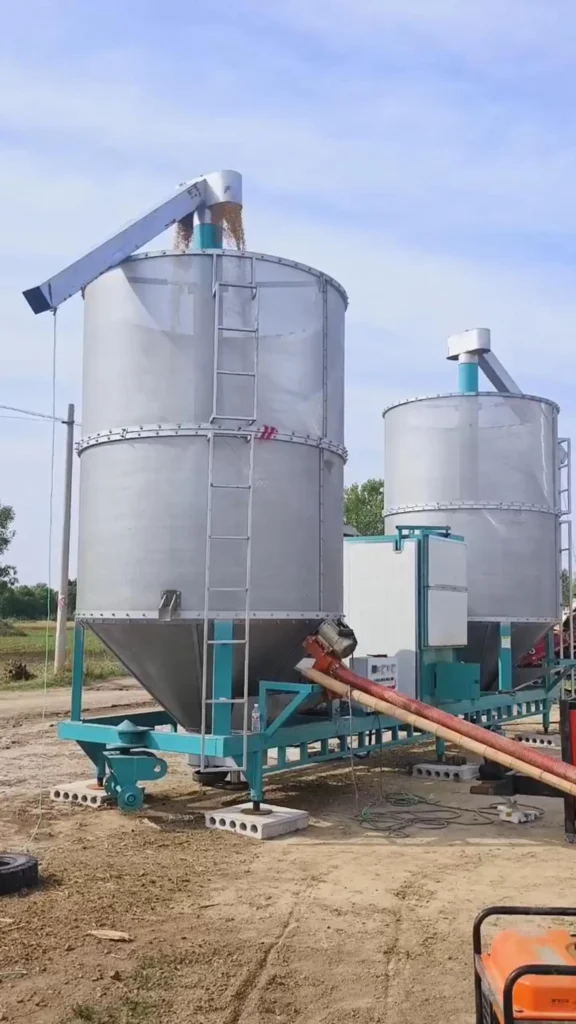
Grain Dryer Waiting for Heat in the Field: Pre-Start Readiness and Technical Overview
Table of Contents
- 1. The Pre-Start Scene: A Grain Dryer in the Field
- 2. Readiness Checks Before Ignition
- 3. Technical Specifications of the Grain Dryer
- 4. Operational Benefits of a Well-Prepared Dryer
- 5. Applications for Grain Farmers and Cooperatives
- 6. Conclusion: From Waiting to Working
A grain dryer waiting for heat in an open field represents a critical moment in post-harvest processing. The equipment stands fully assembled, all systems verified, yet the heat source has not been activated. This phase – between installation and full operation – is essential for safety checks, parameter calibration, and ensuring that once the dryer starts, it will run efficiently without interruption. This article describes the technical characteristics, pre-start procedures, and benefits of a modern grain dryer during its waiting period.

1. The Pre-Start Scene: A Grain Dryer in the Field
On a typical operating day, a grain dryer waiting for heat sits on a prepared concrete pad or compacted ground, connected to fuel lines and electrical supply. The mesh conveyor belt is stationary. The temperature control gauge displays ambient readings, and the burner remains off. This visual scene is common during morning startups or between batches. The dryer is not inactive – it is in a standby state, with control electronics powered, sensors active, and all mechanical components ready to receive the start command.
Wind may blow across the steel casing, and sunlight creates reflections, but these environmental factors do not affect the dryer’s readiness. The equipment is designed for outdoor installation, with weather-resistant coatings and sealed electrical enclosures. A grain dryer waiting for heat can remain in this state for hours or even days without degradation, as long as proper pre-start protocols are followed.
2. Readiness Checks Before Ignition
Before a grain dryer waiting for heat transitions to active drying, operators must complete a series of verification steps:
- Electrical system check: Confirm voltage, ground continuity, and emergency stop functionality.
- Fuel system inspection: Verify fuel level (diesel, gas, or biomass), check for leaks, and purge air from lines.
- Mesh belt tension and alignment: Ensure even belt tracking to prevent material spillage.
- Temperature sensor calibration: Compare sensor readings with a reference thermometer.
- Airflow verification: Manually spin fans to confirm free rotation.
- Control panel review: Load the desired drying recipe (temperature zones, belt speed, target moisture).
Only after these checks does the grain dryer waiting for heat enter “ready” mode. The control panel displays a green indicator, and the operator can initiate the start sequence. This rigorous preparation reduces unplanned downtime and ensures uniform drying quality.
For fundamental principles of grain drying, refer to this external resource on grain drying.
▶️ Video: Step-by-step startup of a grain dryer – from waiting to full production
3. Technical Specifications of the Grain Dryer
The specific unit shown here is a continuous-flow mesh belt grain dryer manufactured by Jinlu Machinery. Key technical parameters include:
- Dimensions: Length 8m – 15m, width 1.8m – 2.5m, height 2.2m – 3.0m.
- Drying capacity: 5 – 20 tons per hour (depending on grain type and initial moisture).
- Temperature range: 40°C – 130°C, independently controlled for 3–6 zones.
- Heat source: Diesel burner, natural gas, or biomass hot air generator.
- Power consumption: 15 – 45 kW (main drive fans and conveyor).
- Control system: PLC with HMI touchscreen, data logging, remote access option.
Even while a grain dryer waiting for heat, the control system actively monitors ambient conditions. The operator can review historical data, adjust recipes, and perform diagnostics without starting the burner. This feature allows for efficient planning and minimizes fuel waste.
For other drying solutions, see our industrial vegetable mesh belt dryer series.
4. Operational Benefits of a Well-Prepared Dryer
A grain dryer waiting for heat that has undergone thorough pre-start checks delivers several advantages:
- Reduced post-harvest losses: Immediate startup when grain arrives prevents spoilage from moisture.
- Energy efficiency: Proper calibration avoids overheating or under-drying, saving fuel.
- Consistent product quality: Uniform temperature profiles preserve grain integrity and market value.
- Lower labor costs: Automated controls reduce the need for constant manual monitoring.
Data from field installations show that a well-maintained grain dryer waiting for heat for less than 30 minutes between batches achieves 98% drying uniformity, compared to 85% for dryers that are rushed into operation without proper checks. The waiting period is not downtime – it is quality assurance.
5. Applications for Grain Farmers and Cooperatives
This type of grain dryer is suitable for a wide range of cereals and oilseeds:
- Wheat, barley, oats
- Corn (maize)
- Rice (paddy)
- Sunflower seeds, canola, soybeans
- Sorghum and millet
Farmers and cooperatives benefit from having a grain dryer waiting for heat on-site, especially during harvest seasons when weather is unpredictable. Instead of relying on sun drying or expensive third-party services, they can dry grain immediately after threshing, lock in quality, and sell at higher prices. Many Jinlu customers have reported payback periods of less than two harvest seasons.
6. Conclusion: From Waiting to Working
A grain dryer waiting for heat is more than a static piece of equipment – it is a symbol of industrial discipline and readiness. The period before ignition is used for critical safety and performance checks that ultimately save time, fuel, and grain. Jinlu Machinery designs its grain dryers to excel in this transition: reliable components, intuitive controls, and robust construction that withstands field conditions.
When the heat finally arrives – when the burner ignites and the mesh belt begins to move – the waiting proves its value. Grain is dried efficiently, uniformly, and economically. That is the purpose of every grain dryer, from the waiting state to full operation.
📞 Ready to eliminate post-harvest losses?
Contact Jinlu Machinery for a free grain drying consultation or on-site material test.
WhatsApp: +86 15093311739
Email: [email protected]
Visit our website for more case studies and equipment specifications: chinadryerfactory.com
✅ Key takeaway: A grain dryer waiting for heat is a state of readiness, not idleness. Proper pre-start checks improve efficiency, reduce losses, and ensure consistent grain quality. Contact Jinlu for your drying solution.